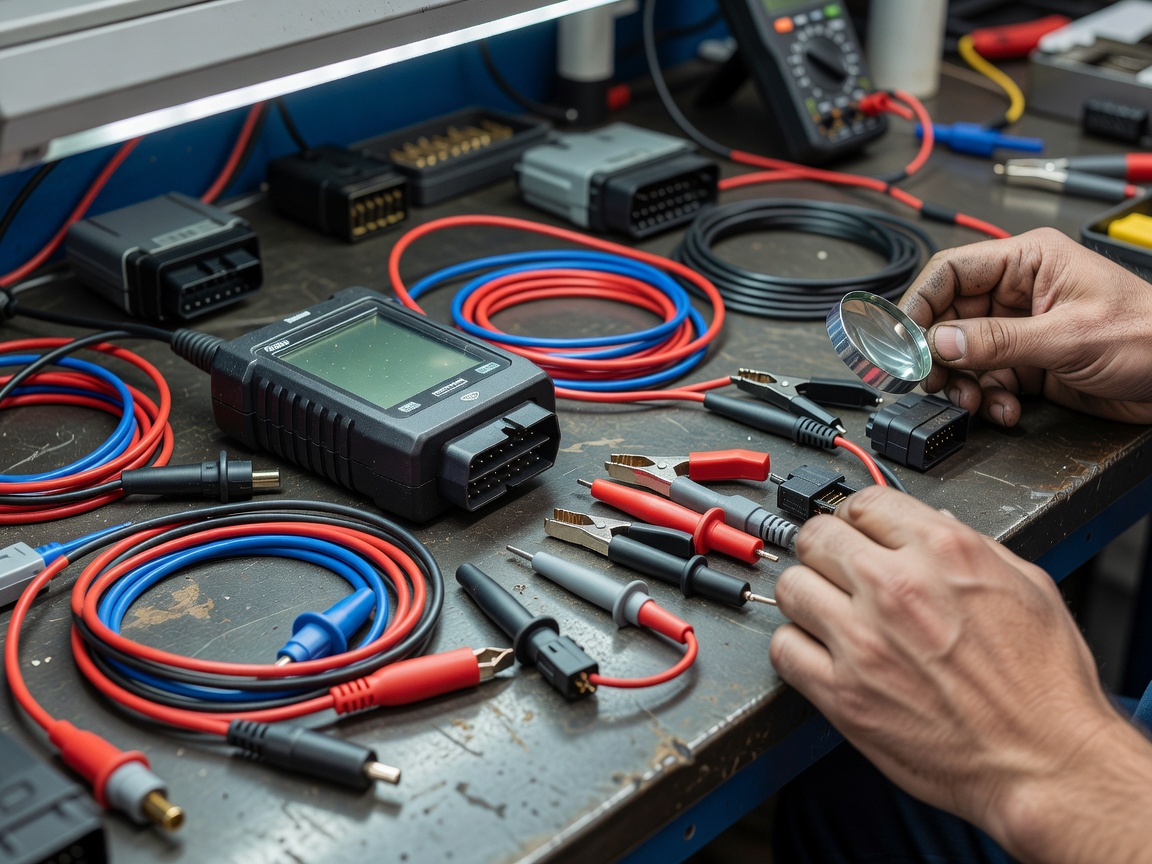
What it covers
Servicing focuses on condition. The review may include housings, screens, buttons, connectors, power supplies, batteries, test leads, probes, adapters and protective cases. The exact scope depends on equipment type and the symptoms reported.
When it is useful
Schedule a condition review after heavy workshop use, transport, fluid exposure, cable strain, an intermittent connection or a failed functional check. It is also useful before a tool is reassigned to another technician or returned to active service.
Inspection points
- Look for cracked housings, loose controls or damaged displays.
- Check connector alignment, contamination and retention.
- Inspect cables for cuts, kinks, exposed conductors or stressed boots.
- Review chargers, batteries and external power arrangements.
- Confirm that accessories are identified and stored with the instrument.
Typical workflow
We start with the reported symptom and equipment identity. A visual inspection follows. Power-up and basic control checks are performed where appropriate. Leads and interfaces are checked separately because an instrument fault and an accessory fault can look similar. Findings are recorded before any service action is recommended.
Common issues
Connector wear is common in equipment that is connected and disconnected repeatedly. Cable strain can create intermittent behaviour. Uncontrolled charging, contaminated contact surfaces and damaged storage cases can shorten service life. These conditions should be recorded rather than assumed to be software faults.
Service records
A useful service record states what was inspected, what was found, what was cleaned or replaced, and what remains outside scope. It should distinguish observation from diagnosis. If calibration or specialist repair is required, that route should be listed separately.
Advantages
Regular condition checks improve equipment visibility. They make recurring cable failures easier to identify and help a workshop decide whether to repair, retire or replace an accessory. They also support a clear handover between users.
Limitations
Servicing does not guarantee compatibility with a vehicle or software environment. It does not establish measurement accuracy unless a calibration procedure is separately performed. Parts availability and repair methods depend on the equipment design.
Next action: describe the symptom, equipment category and accessories involved. Include photographs only when they help identify physical damage.