What it covers
Inspection covers the visible condition and practical operation of diagnostic equipment. Testing may include power-up, display response, control input, cable continuity where suitable, interface response and measurement behaviour. The exact method depends on the instrument design.
When it is useful
Use this service when equipment is suspected of causing a fault, when an instrument returns from transport, or when an item is being accepted into a workshop. It can also establish a baseline before calibration, servicing or reassignment.
Inspection sequence
- Identify the equipment and accessories under review.
- Inspect housing, labels, connectors, leads and power components.
- Confirm startup and basic control response.
- Check relevant inputs and outputs using an appropriate method.
- Record observed behaviour, limitations and recommended next action.
Functional testing
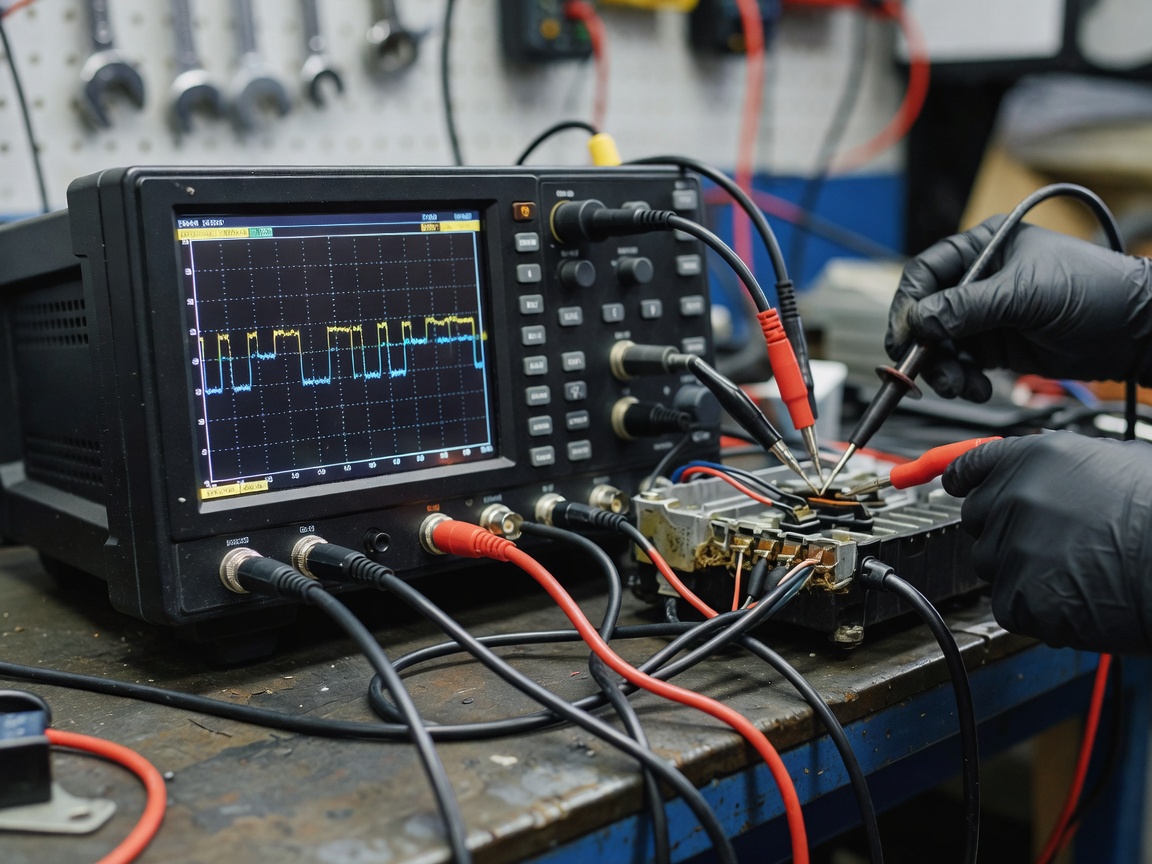
Functional testing asks whether the equipment performs its intended basic operation. A scan tool may be checked for startup, interface recognition and session handling. An oscilloscope may be checked for input response and display behaviour. A multimeter may be checked using a suitable reference or known source. These are examples, not universal procedures.
Fault identification
A failed result does not always identify the failed part. The lead, adapter, power source, software environment and test method can affect an observation. We isolate the chain where practical and record what was actually checked.
Measurement verification
Verification is distinct from a simple power-up test. If the task depends on a measured value, the instrument may need calibration review against an appropriate reference. The applicable method and acceptance criteria depend on equipment documentation and intended use.
Documentation
The report should identify the item, test conditions, checks performed and result. It should state whether the equipment was accepted for the intended task, accepted with a limitation, referred for service or left for further investigation.
Limitations
Inspection cannot reproduce every vehicle, ECU or workshop condition. A controlled check provides evidence about the equipment under the stated conditions. It is not a universal compatibility statement or a guarantee of future performance.
Next action: provide the symptom, equipment category, accessories and intended use. The test path will be built around the failure point.